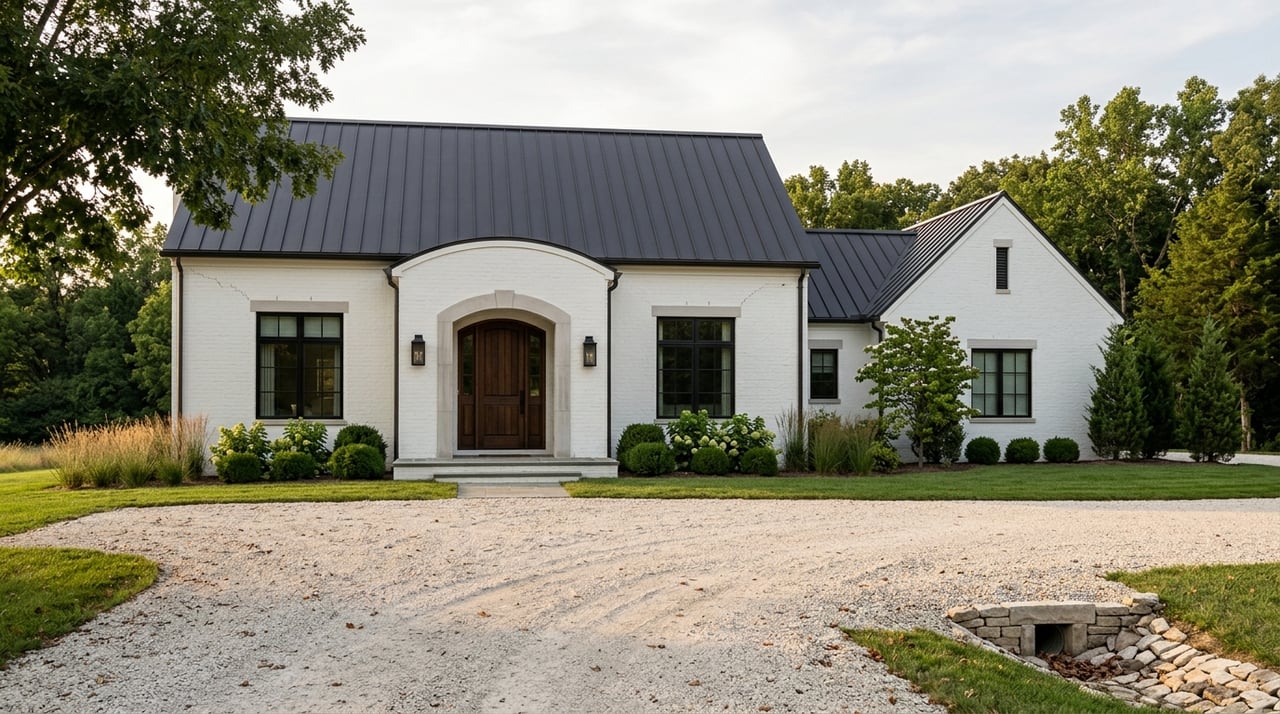
College Grove Acreage Buying: What to Check First
May 21, 2026
May 21, 2026
If you are dreaming about room to spread out in College Grove, it is easy to assume that acreage automatically means freedom to build, farm, or keep horses. In reality, buying land here takes more than falling in love with a beautiful parcel. You need to know how zoning, septic, access, and utilities shape what the land can actually do for you. This guide will help you focus on the details that matter most before you buy. Let’s dive in.
College Grove is not one simple rural land market. In unincorporated Williamson County, land use is governed by the county zoning ordinance, and the College Grove Special Area Plan is designed to preserve the village’s small-town character.
That matters because different parts of College Grove follow different standards. The Village Core Subarea and the General Village Subarea can allow smaller lots, while the county’s Voluntary Agricultural District requires 15-acre minimum lots and 200-foot minimum width. A property marketed as acreage or mini-farm land may still be governed by village-style standards depending on the zoning map.
For you as a buyer, the key takeaway is simple: do not rely on listing language alone. Williamson County describes its zoning ordinance as an evolving document, so parcel-specific verification with the current zoning map and Planning staff is the safer path.
Zoning should be your first checkpoint because it influences almost every other decision. Before you think about home plans, a barn, a guest house, or future lot splits, you need to confirm the actual zoning district.
This is especially important if you want a rural lifestyle use. Williamson County’s agricultural district is oriented to rural-economy uses, with residential uses secondary, and equestrian facilities are allowed only on 15-acre minimum sites with a maximum of one equine per two acres.
So if your goal is a horse property or hobby farm, ask direct questions early. Can this parcel support that use under current zoning, or does the listing simply describe a lifestyle rather than a permitted use?
In unincorporated Williamson County, septic is usually the default. The county says it does not own or operate public sewerage collection and treatment facilities in these areas unless a neighboring sewer system is available.
That means soil and wastewater planning are often among the most important due diligence items. TDEC says a septic permit should be obtained before any dirt work or building-pad construction, and alternative systems are typically used when soil or site conditions are not favorable.
If a site needs an alternative system, the process becomes more technical. Those applications require an extra-high-intensity soils map prepared by a Tennessee-licensed soils consultant.
For resale land purchases, TDEC also notes that inspection letters are routinely requested by buyers, realtors, and lenders. That can make septic review important not only for buildability, but also for financing and confidence before closing.
One local septic rule catches many buyers by surprise. Williamson County says each individual structure served with running water must have its own septic system.
That means a guest house, barn apartment, detached studio with plumbing, or workshop with water service may trigger additional septic review. If your long-term plan includes multiple improved structures, it is smart to understand that upfront rather than after purchase.
A beautiful tract is much less useful if access is unclear. Williamson County’s subdivision regulations say no building permit may be issued unless the lot fronts on an accepted public way or a permanent easement that conforms to county rules.
If the property is reached by a shared driveway easement, current regulations require at least a 50-foot-wide easement and limit that access setup to five lots or tracts. Driveway locations on existing county roads also require county highway approval.
There are added spacing rules on larger roads. In minor subdivisions, driveways on collector or arterial roads must be at least 100 feet apart, and parcels with state highway frontage require a TDOT entrance permit before driveway construction or modification.
For you, this means legal access is not just about whether you can physically reach the property today. It is about whether your planned use can support future permitting.
Water availability is another issue to verify early. Williamson County says no subdivision may be approved until there is an adequate water supply and adequate wastewater disposal.
Where public water is not available, certain minor subdivisions and large-lot easement subdivisions must have lot areas in excess of five acres. In the College Grove area, one utility to confirm is the Nolensville/College Grove Utility District, which provides water service to its customers.
This is one reason land due diligence can feel different from buying a home in an established neighborhood. Instead of assuming systems are already in place, you need to confirm what exists, what can be added, and what that means for cost and timeline.
Some buyers want a homesite now and flexibility later. If that sounds like you, it is important to understand that future division of the land may involve more than a survey.
TDEC requires a subdivision evaluation when land is divided into two or more lots for future construction with septic. That process uses a survey and soils map from a Tennessee-licensed soils consultant.
Williamson County’s subdivision regulations also exempt some divisions where all resulting parcels are five acres or larger and no new road or utility construction is required. Still, that exemption does not remove septic or access questions.
In other words, a parcel that looks easy to split on paper may still face real-world limits. If future division is part of your investment strategy, treat that as a major diligence item before you close.
There is a reason buyers are drawn to College Grove land. The special-area rules are designed to preserve open space, natural resources, and village character, which can support privacy, scenery, and room for rural uses.
But acreage also comes with more self-management than a typical subdivision lot. You may have longer driveways, more mowing, more drainage concerns, and more upkeep for fences, gates, and access points.
Commute planning matters too. TDOT notes that reasonable access does not mean the most direct or convenient route to a property, so it is smart to drive the route at the times you would actually use it.
If taxes are part of your decision-making, the Greenbelt Program is worth reviewing. Williamson County says qualifying land is taxed on present use rather than market value, which can be meaningful for larger tracts.
However, the requirements are specific. The parcel must meet acreage and use rules, including at least 15 acres, actual agricultural activity, and an annual application by March 15.
The county also makes clear that planning to farm is not enough. If Greenbelt is part of your long-term ownership plan, confirm whether the property currently qualifies or what would be needed to qualify in the future.
Before you buy acreage or land in College Grove, focus on these questions:
Land purchases usually have more moving parts than a typical home purchase. What looks straightforward online can become much more complex once you dig into zoning maps, access rules, soils work, and permit requirements.
That is why a local, concierge-style approach matters. When you are buying acreage in College Grove, you want someone who understands Williamson County, knows which questions to ask early, and can help you stay focused on the property’s actual potential instead of its marketing description.
If you are considering land or acreage in College Grove and want a thoughtful, high-touch approach to the search and due diligence process, connect with Jessica Cassalia for trusted local guidance.
Stay up to date on the latest real estate trends.


She is the Greater Nashville Market! She specializes in the luxury market, and relocation, and provides a concierge level of service to buyers and sellers! Helping people Navigate Nashville is what she does and serving as a true resource to advise them is why she does it!