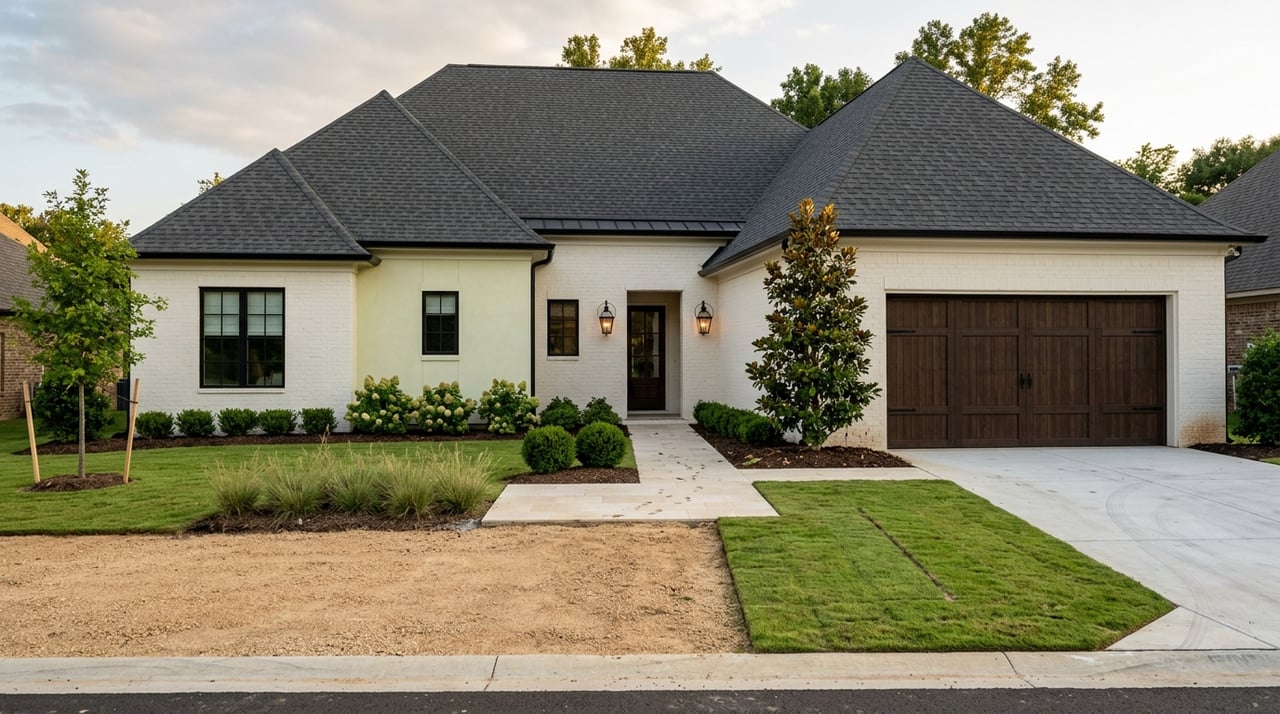
College Grove Custom Home Building: What to Know
June 18, 2026
June 18, 2026
Thinking about building a custom home in College Grove? It can be an exciting way to create a home that fits your land, your lifestyle, and your long-term goals, but it also comes with more moving parts than many buyers expect. In this part of Williamson County, the early steps often matter just as much as the house design itself. This guide will help you understand what to look for, what can affect your timeline, and how to plan with more confidence. Let’s dive in.
College Grove is a rural area in southeastern Williamson County, and that setting shapes the custom-home process from the start. County planning for the area has focused on preserving rural character, limiting growth, and keeping larger tracts over a 20-year planning horizon.
Because College Grove is in unincorporated Williamson County, the county zoning ordinance governs development decisions for most parcels. That matters if you are comparing land, because what works on one lot may not work the same way on another.
Public planning input has also repeatedly highlighted concerns about sewer availability and lot size patterns. While those comments do not create a universal rule for every property, they help explain why buyers often need to confirm land feasibility before they spend much time choosing floor plans or finishes.
In College Grove, the lot is often the biggest variable in a custom build. A beautiful plan on paper does not mean much until you know the property can support the home you want to build.
Williamson County’s electronic plan review system handles several major steps tied to development. That includes concept plans, plats, site plans, driveway permits, land disturbance permits, residential septic design review, and residential building permits.
This is one reason the preconstruction phase can feel more complex than buyers expect. You are not only choosing a house design. You are also working through a sequence of land and approval questions that can move at different speeds.
County planning documents identify water and sewer capacity as major constraints in College Grove. The special-area plan states that the Nolensville/College Grove Utility District served existing customers, but sufficient capacity for appreciable new development did not exist at the time of the plan.
The same planning documents also note that sewer beyond traditional septic systems was not available in the Village and that many parcels have soils that are not suitable for septic use. That combination makes utility and septic review one of the first issues to check when you are evaluating land.
If a property will rely on onsite septic, the county’s Sewage Disposal Division regulates that process. Williamson County also notes that the Board of Health adopted amendments to those regulations on March 17, 2026, so it is smart to verify the current requirements when you begin.
For buyers, the practical takeaway is simple: do not assume every lot will support the same home size, placement, or layout. Septic design, soil conditions, and site constraints can influence where a home sits, how large it can be, and how quickly the project can move.
If a private well is needed, Tennessee requires licensed water well drillers, pump installers, and water treatment device installers. Electricity in this area is typically provided by Middle Tennessee Electric, and electrical permits for projects in unincorporated county areas are handled through the state CORE system.
Driveway access and land disturbance review can also affect the schedule. These steps may sound technical, but they are a normal part of building on land in a rural area where the site itself needs careful planning.
One of the best ways to reduce surprises is to understand that custom building in College Grove is a process, not a single permit. Several reviews may need to happen before your builder can truly move at full speed.
A typical early path may include:
The exact order can vary by property, but the big picture stays the same. The approvals tied to the land often drive the timeline before vertical construction even begins.
Williamson County currently permits buildings under the 2021 International Building Code, 2021 International Residential Code, 2021 International Plumbing Code, 2021 International Mechanical Code, and the 2018 International Energy Code. These standards help shape how your plans are reviewed and built.
The county also notes that plan sets are not always required to be prepared by a registered design professional unless project complexity warrants it. Even so, custom homes often involve details, site challenges, or design goals that benefit from a strong team early in the process.
That does not mean every project needs the same design path. It means your lot, your plan, and the complexity of the home should guide your decisions.
If you are building within an amenity community, county approval may be only part of the story. Private community design review can be just as important.
For example, The Grove’s design standards state that its Architectural Review Board maintains design rules and that owners must obtain association approval before making improvements. The handbook also notes that incomplete or inaccurate submittals can be rejected.
These private standards can be detailed. They may address items such as foundations, siding, colors, fences, play structures, and storage.
If you are comparing lots in a neighborhood with private design review, you want to understand those rules before you finalize your plans. A homesite may be appealing, but the community’s standards can affect what you are allowed to build and how long the review process takes.
This is especially important if you already have a builder or architect in mind. Early coordination can help you avoid redesigns, resubmittals, or delays that could have been prevented.
Choosing the right builder is about more than style and budget. In Tennessee, licensing matters.
The state says a contractor’s license is required before bidding or offering a price on projects of $25,000 or more. That same threshold also affects many subcontracting trades.
If your project includes well work, Tennessee also requires separate licensing for that specialty through TDEC. In practical terms, you should confirm both the general contractor and the relevant specialty trades before signing a contract.
A strong fit is not just about who can build a beautiful home. It is about who can guide the project through the local process with fewer surprises.
Many buyers focus on the construction period, but the preconstruction phase can take much longer than expected. National benchmarks help show why.
A 2026 NAHB study found that the average period from zoning application to the start of site work was 15.1 months. The same study found an average of 11.5 months from site work to sale of the lot to the builder, and 1.3 months from sale of the lot to the start of construction.
NAHB also reports that the average time to complete a single-family home in the U.S. was 10.1 months in 2023. These are national benchmarks, not College Grove-specific promises, but they show how the calendar can be dominated by the steps that happen before the home is actually being built.
For custom homes in College Grove, the biggest schedule risks are often tied to:
That means your project timeline may depend less on picking finishes and more on getting the homesite ready and approved.
A custom build in College Grove is rarely just a home search. It is often a land search, feasibility review, builder coordination process, and timeline management exercise all at once.
An experienced local agent can help you compare lots with different utility and septic constraints, review subdivision and HOA documents, coordinate with your builder and surveyor, and keep the moving pieces aligned through county and community review steps.
That support can be especially valuable if you are relocating to Middle Tennessee and trying to make decisions from a distance. In a market like College Grove, local guidance can help you avoid lots that look promising online but present real challenges once feasibility work begins.
If you want to build in College Grove, it helps to think in this order:
This approach can save time, money, and frustration. More importantly, it helps you build with clarity instead of guesswork.
If you are weighing land options or trying to understand what it really takes to build in College Grove, working with a local advisor can make the process feel much more manageable. Jessica Cassalia offers concierge-level guidance for buyers and relocating families across Williamson County and Middle Tennessee, with the local insight needed to help you assess homesites, compare options, and move forward with confidence.
Stay up to date on the latest real estate trends.
She is the Greater Nashville Market! She specializes in the luxury market, and relocation, and provides a concierge level of service to buyers and sellers! Helping people Navigate Nashville is what she does and serving as a true resource to advise them is why she does it!