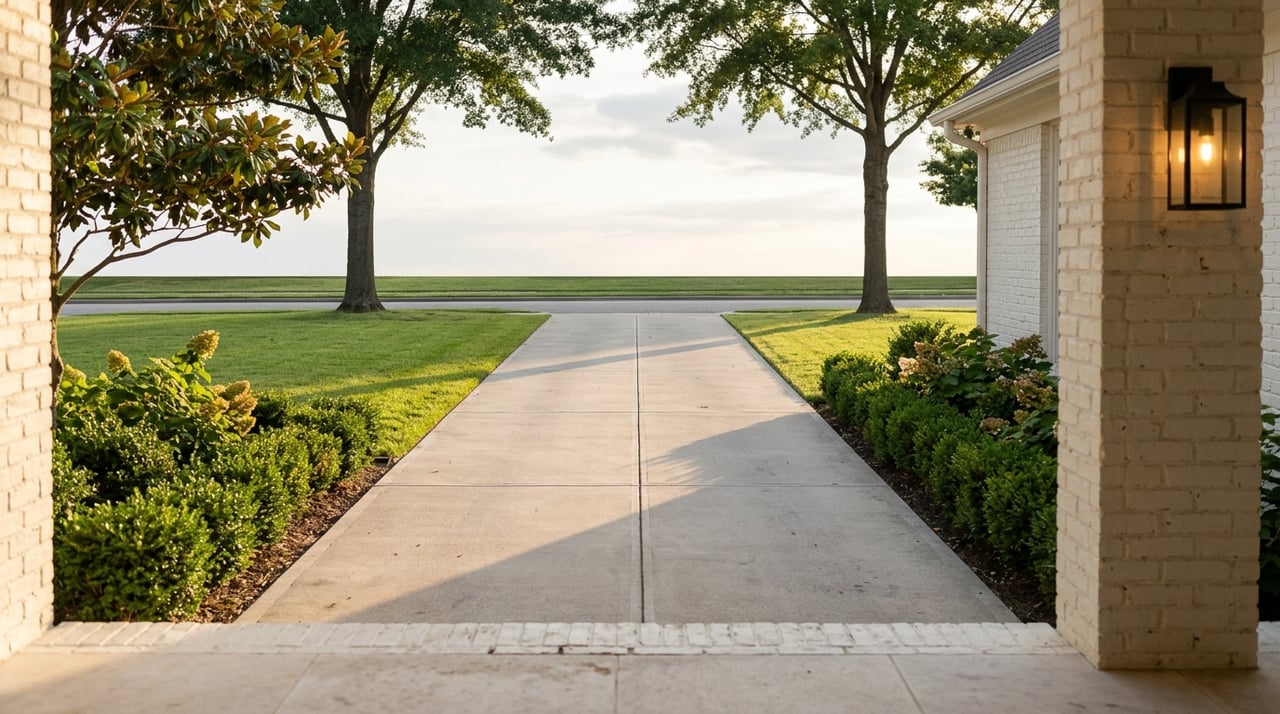
Brentwood TN Commute to Nashville: Brentwood or Nashville?
June 11, 2026
June 11, 2026
If you’re choosing between Brentwood and Nashville, the commute can feel like the deciding factor. You want a home that fits your life, but you also want to know what your mornings and evenings will really look like. The good news is that Brentwood is not automatically a “bad commute” choice, and Nashville is not automatically the easier answer. Once you understand how these two areas work day to day, the decision gets much clearer. Let’s dive in.
On paper, Brentwood’s average commute is not dramatically different from nearby options. The U.S. Census Bureau reports a mean travel time to work of 25.7 minutes for Brentwood in the 2020 to 2024 ACS data. That compares with 28.0 minutes in Williamson County, 24.7 minutes in Nashville-Davidson metropolitan government (balance), and 25.7 minutes statewide.
That matters because it pushes back on a common assumption. If you work in or around Nashville, Brentwood is still a realistic home base. The bigger question is usually not average drive time alone, but how your route behaves during peak hours.
Brentwood is built around roads and corridors in a way that feels different from closer-in Nashville. The city’s planning guidance highlights major arterials and collectors, and most land in Brentwood is residential. The city also notes residential standards built around roughly one dwelling unit per acre, which points to a lower-density, more suburban pattern.
In practical terms, that often means more space and a more residential setting. It also means your daily routine is more likely to depend on a few key roads and how those roads are moving when you leave home. So even if the average commute time looks manageable, the experience can vary a lot.
If you live in Brentwood, your commute often comes down to corridor choice more than simple mileage. Two homes may both be in Brentwood, but one could feel much easier for your workday than the other depending on how it connects to major routes.
The road names that matter most are:
Brentwood’s planning documents identify Maryland Way, Franklin Road, Concord Road, and Wilson Pike as arterial examples. The city’s 2023 major thoroughfare update also includes projects such as widening Wilson Pike, widening Moores Lane, and adding a new I-65 interchange. That tells you something important: local leaders understand that traffic flow in Brentwood is tied closely to specific corridors.
Wilson Pike is one of Brentwood’s most important north-south roads, just east of I-65. Old Smyrna Road plays a different role as a narrow, heavily traveled east-west arterial that links Wilson Pike and Edmondson Pike. Those details help explain why one cross-town route can feel very different from another, even within the same city.
This is why buyers often benefit from looking beyond a map pin. A home’s relationship to Franklin Road, Wilson Pike, Concord Road, Moores Lane, or I-65 can shape the whole rhythm of your week. Shorter distance does not always mean easier routine, and a slightly longer drive can sometimes feel more predictable depending on the corridor.
Brentwood is not ignoring traffic pressure. The city’s Traffic Operations Center can remotely control all 49 signalized intersections and monitor 24 cameras, adjusting signal timing in real time for crashes, breakdowns, and special events.
That does not remove peak-hour traffic, but it does show that the city actively manages it. For you as a buyer, that means Brentwood’s commute story is not static. It is a road network that the city is actively monitoring and adjusting as conditions change.
Closer-in Nashville can offer something Brentwood usually does not: more ways to get where you need to go. Nashville’s Transportation Demand Management program promotes public transit, walking, biking, teleworking, carpooling, and micromobility.
WeGo’s transit options include buses, rail, access service, WeGo Ride, park and ride, WeGo Link, bike and ride, school routes, vanpool, and guaranteed ride home. The WeGo Star serves the East Corridor to and from downtown Nashville’s Riverfront Station, and Route 93 provides West End service through Broadway, 21st Avenue, the Vanderbilt area, and the Belmont area.
For some households, that flexibility is a major quality-of-life benefit. If you want more than one way to handle your workweek, closer-in Nashville may give you more options than a Brentwood-style commute that is mainly road-based.
The choice often comes down to what kind of daily life you want. Brentwood tends to offer a more suburban setting with a road-centered routine. Nashville, especially closer to the core, can offer more multimodal access and potentially shorter trips within the urban area.
Neither is automatically better. The best fit depends on what you value most in your home search and what tradeoffs feel manageable for your household.
| Priority | Brentwood | Closer-In Nashville |
|---|---|---|
| Commute pattern | Mostly corridor-based driving | More multimodal options |
| Daily travel feel | Route choice matters a lot | More flexibility in how you get around |
| Development pattern | Lower-density residential setting | More urban, closer-in living pattern |
| Best fit for | Buyers who want suburban space and can tolerate peak-hour roads | Buyers who value access, flexibility, and shorter in-town trips |
A smart move is to think about your commute in real life, not just in theory. Before you choose Brentwood or Nashville, ask yourself a few practical questions.
A route that feels fine at one hour can feel very different at another. Since Brentwood commuting is so corridor-driven, departure time can change the experience quite a bit.
Look at whether your likely route depends on I-65, Franklin Road, Wilson Pike, Concord Road, Old Smyrna Road, or Moores Lane. In Brentwood, this question may matter as much as the total number of miles.
If having multiple transportation choices matters to you, Nashville may have an edge. If you are comfortable with a drive-centered routine, Brentwood may still work very well.
Brentwood’s lower-density pattern supports a more residential feel. Nashville may offer more commute-mode flexibility and easier access to urban destinations. Knowing which benefit matters more can simplify your decision quickly.
If you’re moving to Middle Tennessee from out of town, this is one of the easiest places to misread the map. A suburb that looks close enough on paper may feel very different once you learn how local corridors carry traffic. That is especially true in Brentwood, where the commute is shaped heavily by arterial roads and I-65 connections.
This is why a local, neighborhood-level view matters. You are not just choosing between Brentwood and Nashville. You are choosing between specific daily patterns, specific road networks, and the kind of home life that will support your schedule.
Brentwood is a viable choice for many people who work in Nashville. Its average commute time is close to the state average and only slightly above the Nashville-Davidson balance figure. But Brentwood works best when you understand that commuting there is a corridor decision, not just a distance decision.
If you want a more suburban residential setting and you are comfortable planning around peak-hour roads, Brentwood can be a strong fit. If you want more flexibility through transit, walking, biking, or shorter urban trips, closer-in Nashville may better match your day-to-day needs.
If you’re weighing Brentwood versus Nashville and want help narrowing the right fit for your routine, home goals, and relocation timeline, Jessica Cassalia can help you compare neighborhoods with a local, concierge-level approach.
Stay up to date on the latest real estate trends.



She is the Greater Nashville Market! She specializes in the luxury market, and relocation, and provides a concierge level of service to buyers and sellers! Helping people Navigate Nashville is what she does and serving as a true resource to advise them is why she does it!