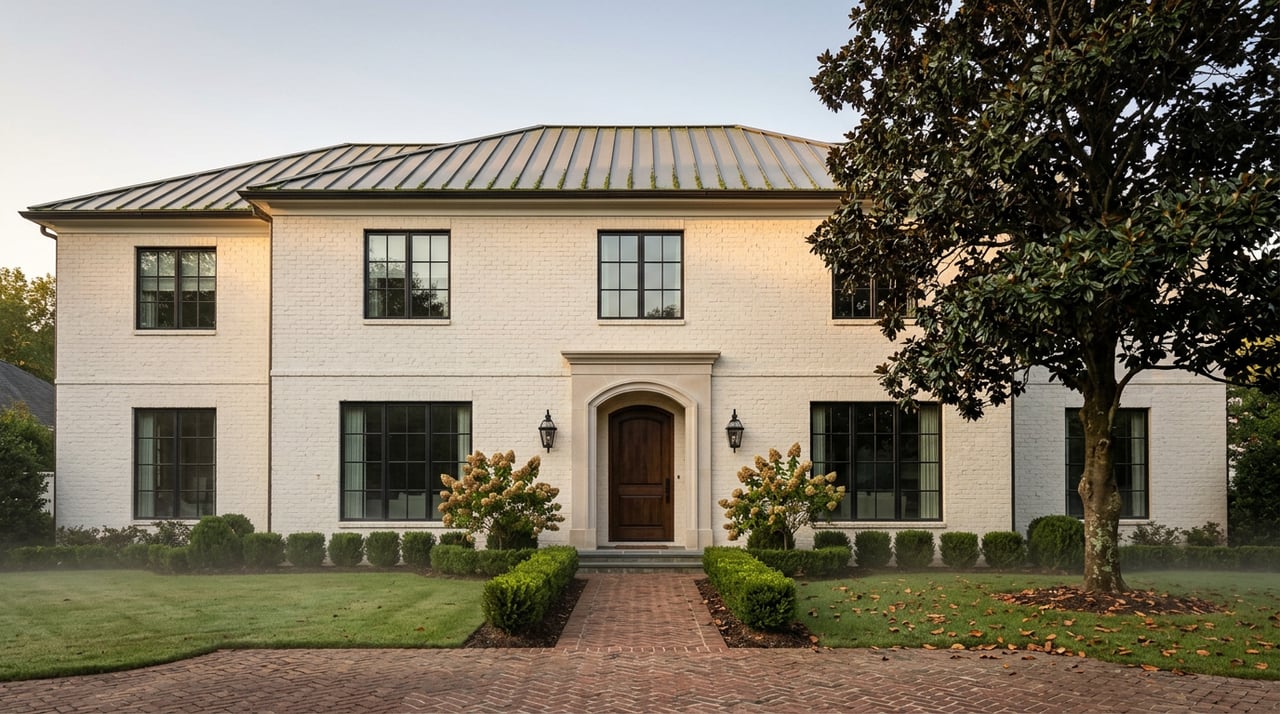
Franklin vs Brentwood Real Estate: What Drives the Price Gap?
September 24, 2026
September 24, 2026
A relocating buyer pulls up two listings on a Saturday morning. One sits in Franklin, one in Brentwood. The Franklin house is priced at $949,995. The Brentwood house is priced at $1.32 million. The buyer's first instinct is the one almost everyone has: Brentwood must be the fancier zip code, the one where the same finishes cost more.
Run the math and that instinct falls apart. Both homes price out to almost exactly the same rate per square foot, $345 in Franklin against $346 in Brentwood, based on six months of closed sales tracked into mid-2026. The $370,000 gap in the sticker price has nothing to do with granite versus quartz or one town having better bones than the other. It comes down to two things: how much house you're getting, and how far that house sits from downtown Nashville.
Here's what a trailing six-month window of closed sales into 2026 actually shows side by side:
| Metric (six-month closed sales, 2026) | Franklin | Brentwood |
|---|---|---|
| Median closed price | $949,995 | $1,320,000 |
| Price per square foot | $345 | $346 |
| Implied median home size | ~2,750 sq ft | ~3,809 sq ft |
| Distance to downtown Nashville | ~20 miles | ~10 miles |
That one-dollar gap in price per square foot is close enough to call a tie. Once you know that, the $370,000 difference in median price stops being a mystery about which city is "worth more" and becomes a question of square footage and commute. Brentwood's typical closed home in this window ran roughly a thousand square feet larger than Franklin's, and it sat about half the distance to downtown. That combination, not superior construction, is what the median is pricing in.
The gap between Franklin and Brentwood isn't a quality gap. It's a square footage and commute gap that happens to show up as a price gap.
If you're comparing a Franklin resale to a Brentwood resale at similar finish levels, you're not paying a premium for Brentwood dirt. You're paying for two things that don't show up in a listing photo: a bigger footprint and a shorter drive.
That has a practical consequence for how you shop. If your priority is maximizing square footage and getting into newer construction, Franklin currently offers a wider entry-to-mid price band and more total inventory to choose from. If your priority is trimming ten miles off a daily commute into Nashville or Cool Springs, that's the premium Brentwood is charging, and it's showing up in lot size and house size, not in a higher construction cost per foot.
Neither answer is right for every relocating family. A corporate transferee who works from home three days a week has a very different calculation than one commuting into downtown five mornings a week.
The city-wide median hides how differently the two markets are built underneath.
In Franklin, the highest-volume subdivision by far is Westhaven, which accounted for 33 closings in a single month this spring, roughly 18 percent of the entire Franklin market in that stretch. What makes Westhaven worth naming specifically is the spread inside it: sales in that one neighborhood ranged from $705,000 to $5.7 million in the same month. A buyer using the Franklin city-wide median to size up a Westhaven listing is working with a number that's wrong for almost everyone in that subdivision. Berry Farms and newer construction farther south offer a more accessible entry point with townhomes and smaller single-family plans, while Laurelbrooke sits at the other extreme as a gated, premier-luxury pocket. At the very top, Franklin's ceiling is real: one estate in the Tor of Avalon community closed this year at $11.8 million, nearly 14,900 square feet, and it took 281 days to find its buyer, which tells you something about how patient the ultra-luxury tier requires sellers to be.
Brentwood's entry point works differently. The established, non-gated subdivisions under $1 million are effectively the only door into the Brentwood zip code for buyers who aren't shopping the luxury new-construction tier. Above that, the market splits hard into named enclaves: Rosebrooke, a 365-acre new-construction community with 248 homesites where recent sales have ranged from $3.0 million to $6.3 million; Witherspoon, pricing in a similar trophy tier; Governors Club, the city's only guard-gated golf community, anchored by an Arnold Palmer Signature course, where a year of closings ranged from $1.425 million to just over $7 million; and Hampton Reserve, a quieter gated pocket where recent sales clustered between $1.85 million and $2.85 million. Windstone offers a wider band, roughly $900,000 to $4 million, blending older and newer construction under one HOA. If you're a Brentwood resident already, Crockett Park's 164 acres and the Eddy Arnold Amphitheater are the kind of shared amenity that gets baked into what these subdivisions are actually selling, even though it never shows up in a price-per-square-foot column.
Here's the part that surprises most buyers cross-shopping the two cities: Franklin's internal spread by school attendance zone is almost as wide as the entire Franklin-to-Brentwood gap.
Across Franklin's seven Williamson County Schools high school zones, homes closed at a median of $342 per square foot over a trailing 24 months through early July 2026. But that county-wide figure hides a swing of $156 per square foot from top to bottom. The Centennial High zone posted the lowest median, $306 per square foot on a $762,450 median home, the smallest median home size in the city at roughly 2,624 square feet. The Fairview High zone posted the highest, $462 per square foot, though on a much thinner sample of sales. The busiest zone by volume, Independence High, covers much of Franklin's newer master-planned inventory and priced at $432 per square foot on a $1,275,605 median, more than a thousand closings in the same 24-month stretch.
That $156 spread inside one city is nearly the size of the entire premium buyers assume they're paying to leave Franklin for Brentwood. The lesson isn't that one zone is better than another. It's that the question "Franklin or Brentwood" is often less useful than "which zone, which subdivision, which build year," because the answer moves the price more than the city line does.
One more piece of friction shows up on both sides of the county line, and it catches resale sellers off guard more than anything else. In both Franklin and Brentwood, new construction is currently pricing at roughly double the per-square-foot rate of established resale stock, with Brentwood's build-era split running from around $373,000 for older resales up to $4.32 million for new construction within the same city. Builders in active subdivisions can offer rate buydowns, finish allowances, or quick-delivery pricing that a resale seller three streets over simply cannot match dollar for dollar. Many of those new-construction homes sell at or before completion, while comparable resale pockets sit on the market considerably longer.
That dynamic is part of why, county-wide, roughly a quarter of active Williamson County listings had sat 90 days or more without going under contract as of a snapshot in late June 2026, and homes that cross that 90-day mark rarely end up selling at their original list price. If you're listing a resale home anywhere in the $700,000 to $1.3 million band in either city, the builder's incentive package down the road is the number you're actually competing against, not last year's comps.
If square footage and a lower entry point matter most, Franklin's wider price band and larger new-construction pipeline give you more room to work with. If a shorter commute and deeper lots closer to Nashville matter most, Brentwood is charging for exactly that, and the per-square-foot cost of getting it is the same as Franklin's, not a premium on top of it. Either way, the city-wide median is the wrong number to anchor a decision to. The right one is whatever a specific subdivision, zone, and build year are doing this month.
Does a higher price per square foot mean better construction quality? Not necessarily. Franklin and Brentwood price within a dollar of each other per square foot. The difference in what a home costs comes from size, lot, and commute distance, not from one city building to a higher standard than the other.
Is new construction always the better value per foot? Often it prices higher, not lower. New construction in both cities is currently running close to double the per-square-foot rate of established resale homes, in exchange for lower maintenance risk and builder-backed warranties.
How much does the shorter Brentwood commute actually cost in a monthly payment? Based on current active listing prices, moving from a Franklin median toward a Brentwood median typically requires meaningfully more qualifying income, largely because the homes themselves run larger, not because Brentwood construction costs more per foot to build.
If you're weighing Franklin against Brentwood, or trying to figure out which zone or subdivision inside either city actually fits your budget and commute, that's exactly the kind of comparison Jessica Cassalia at NavigatingNashville walks Williamson County buyers and relocating families through every week. Request a free home valuation or a short consultation before you start touring, and skip the guesswork the median price tag creates.
This article is general information, not legal, tax or financial advice. Consult a qualified professional about your situation.
Stay up to date on the latest real estate trends.
She is the Greater Nashville Market! She specializes in the luxury market, and relocation, and provides a concierge level of service to buyers and sellers! Helping people Navigate Nashville is what she does and serving as a true resource to advise them is why she does it!